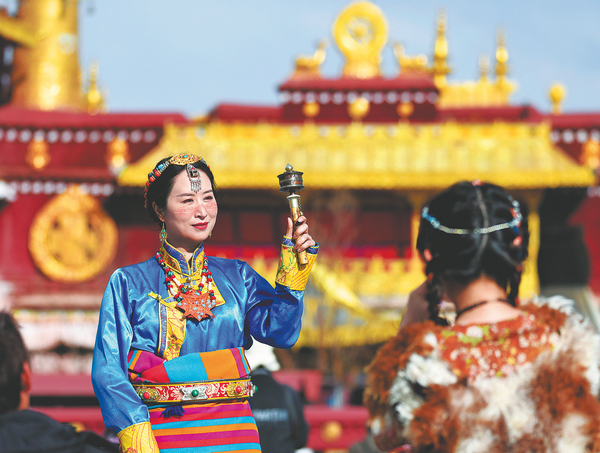
Costume of the Tibetan (Zang) Ethnic Group
Introduction
The costume of the Tibetan (Zang) ethnic group is a vibrant expression of the culture and traditions of one of China's most distinct ethnic communities. Tibetan ethnic clothing is deeply rooted in the region's geographical, climatic, and social conditions, reflecting the diverse landscapes and climates of the plateau. The clothing styles and designs vary significantly across different regions within Xizang, influenced by local customs, religious practices, and historical interactions with neighboring cultures.
Materials and Fabrics
Tibetan ethnic costumes are crafted using a variety of materials that reflect the region's unique environment. Wool is a primary material used extensively in Tibetan ethnic clothing due to its insulating properties, making it ideal for the cold climate of the plateau. Sheep wool and yak wool are commonly used to create thick, warm garments. Additionally, silk and cotton are employed in more elaborate garments, especially those worn for religious ceremonies and festivals. The use of silk, in particular, signifies a connection to the ancient trade routes and the cultural exchanges that have enriched Tibetan clothing traditions over centuries. The fabrics are often dyed in vibrant colors, such as red, yellow, and blue, using natural dyes derived from plants and minerals. These colors have symbolic meanings, often associated with Tibetan Buddhist iconography and spiritual beliefs.
Types of Costumes
Traditional Attire
Traditional Tibetan ethnic attire is characterized by its layered and functional design. The chuba, a long-sleeved robe, is a staple in Tibetan ethnic clothing. It is typically made from wool and can be worn in various styles, depending on the occasion and the wearer’s status. The chuba is often belted at the waist and can be layered with additional garments for added warmth. Men and women both wear the chuba, but there are distinctions in style and embellishment that reflect gender roles and societal status. In addition to the chuba, women often wear an apron known as a pangden, which is brightly colored and signifies marital status. Traditional hats and boots, made from felt or fur, complete the ensemble, providing protection against the elements.
Festive and Ceremonial Costumes
Festive and ceremonial Tibetan ethnic costumes are more elaborate and ornate than everyday wear. These garments are often embellished with intricate embroidery, brocade, and applique, showcasing the wearer’s social status and the occasion's importance. During religious festivals, people often wear their finest attire, which may include headdresses adorned with turquoise, coral, and amber. These stones are not only decorative but also carry cultural and spiritual significance. The ceremonial costumes are a testament to the rich tapestry of the heritage, blending artistic expression with spiritual devotion.
Daily Wear
Daily wear for the Tibetan ethinic group is practical and suited to the demands of their environment. The clothing is designed to withstand the rugged terrain and variable weather of the plateau. For nomadic herders, the garments must allow for ease of movement and robust protection against wind and cold. The chuba remains a staple for everyday use, but it is often less decorated than its festive counterpart. Layering is a common practice, and garments are adjusted according to the season and activity.
Cultural Significance
The costume of the Tibetan ethnic group holds profound cultural significance, serving as a symbol of identity and continuity within the community. The clothing is not merely utilitarian but is imbued with cultural narratives and historical continuity. Each garment carries stories of ancestry, religion, and social customs, playing a crucial role in preserving Tibetan ethnic culture.
Clothing is also a marker of social status and regional identity. Different regions within Xizang have distinct styles and embellishments that signify local customs and practices. The attire worn by monks and lamas is particularly significant, as it denotes religious rank and affiliation within Xizang Buddhism. Monastic robes, typically in shades of maroon and yellow, are designed to reflect humility and devotion, while also adhering to the practical needs of monastic life.








